Download CloudStream APK — Stable & Beta, Latest Version
This is the direct Download CloudStream page — one file, two versions to choose from, and a quick way to confirm what’s actually being installed before it goes on a device. If setup help is needed after downloading, device-specific guides for Android, PC, Android TV, and Fire Stick are linked further down.
Where Does Download CloudStream Actually Come From?
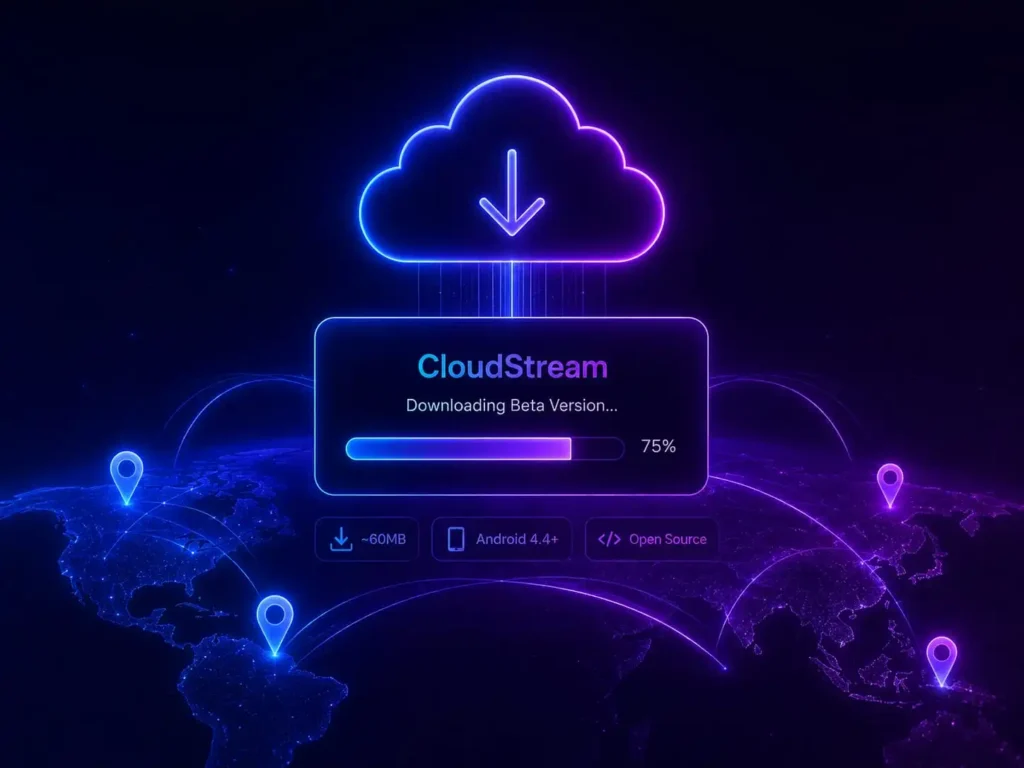
Every legitimate CloudStream Download, including this one, traces back to the same origin: the project’s public source code repository, maintained by its open-source development team. Understanding this chain matters more for an app like this than for most downloads, since the ecosystem has enough unofficial mirrors that knowing where a file genuinely originates is a real, practical safeguard rather than just a technical detail. This page’s download links are checked against that origin regularly, rather than pointing to a third-party host with no clear update history.
Download CloudStream Stable or Beta — Which one Is Right Here
Both versions install the same way and work identically day to day, but they’re built for slightly different priorities:
| Stable release | Beta release | |
|---|---|---|
| Update speed | Slower — changes are tested before release | Faster — often within days of a fix being ready |
| Reliability | Higher — fewer unexpected bugs | Slightly lower — occasional rough edges before a fix lands |
| Best for | Most people, most of the time | Anyone who’s hit a specific bug on stable and wants an early fix |
Swipe left/right to see all columns →
For a first-time download, stable is the sensible default. Switching to beta later, if a specific issue keeps showing up on stable, is always an option — nothing about installing stable first locks anything in permanently.
Current CloudStream Version
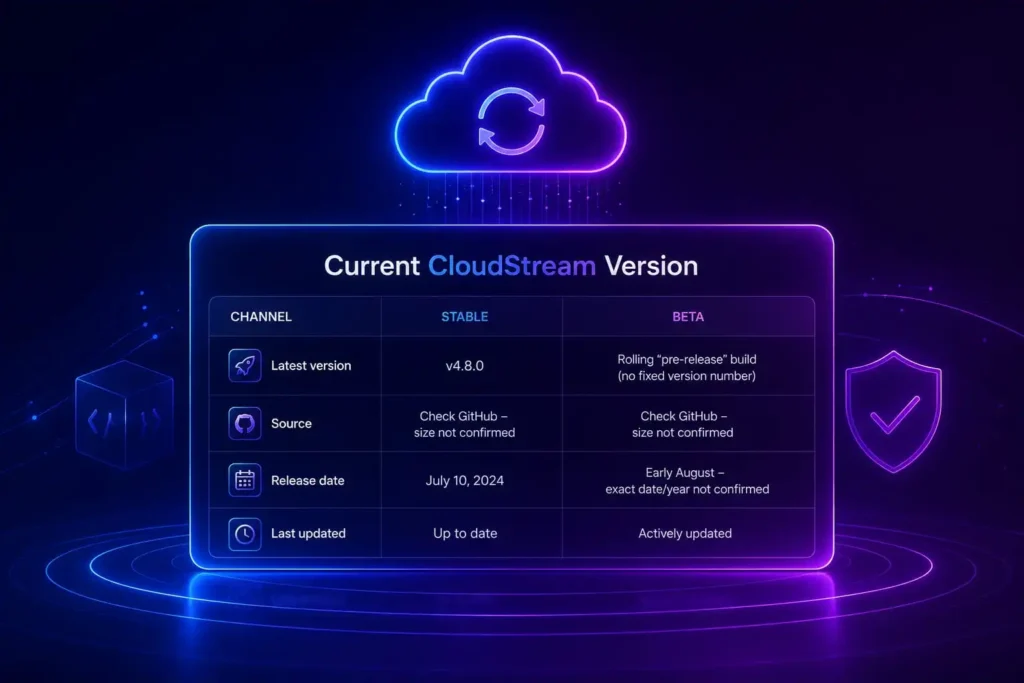
| Details | Stable | Beta |
|---|---|---|
| Latest version | v4.8.0 | Rolling “pre-release” build (no fixed version number) |
| File size | Check GitHub — size not confirmed | Check GitHub — size not confirmed |
| Last updated | July 10, 2024 | Early August — exact date/year not confirmed |
Swipe left/right to see all columns →
What’s Different in This Update
- Added An intro skip database, so recognized shows can skip the opening automatically
- Added A metadata overlay on TV — title, year, and rating info now shows over content on the TV interface
- Added Support for more external players
- Fixed Several security issues
- Fixed Download issues some users were hitting
- Updated The filler-episode database, used to flag skippable filler content
- Updated Various UI/UX polish across the app
- Changed Internal code changes (74 commits since the previous release) — groundwork most of the fixes above depend on
How to Confirm the Download Is Genuine
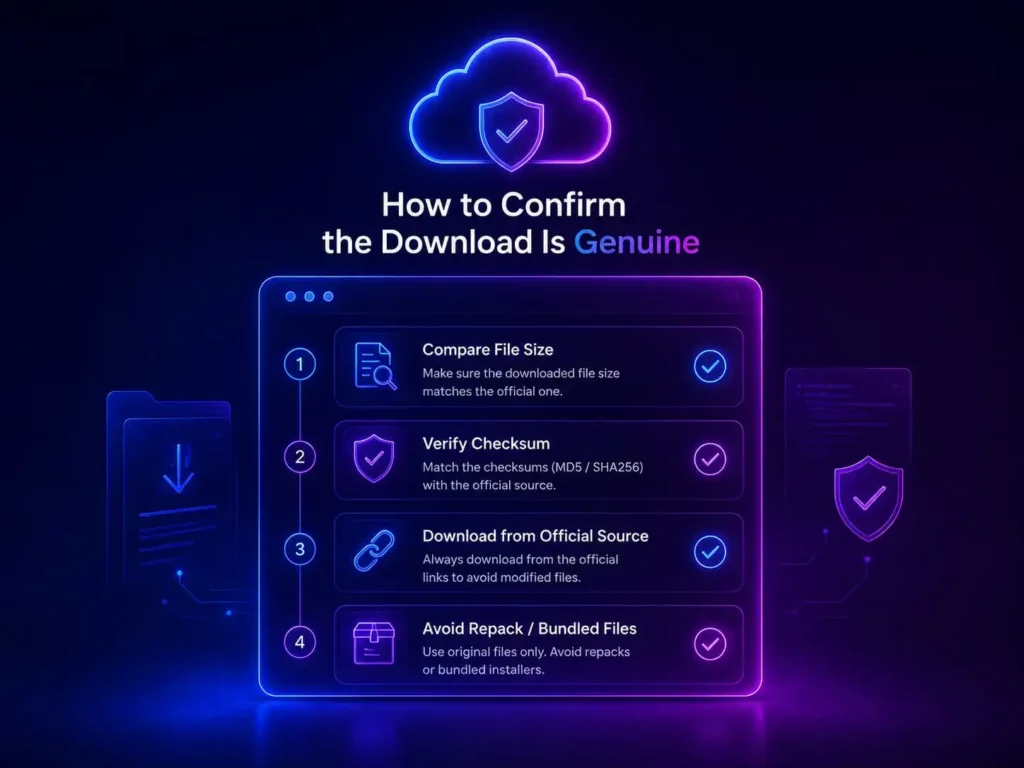
A handful of unofficial sites mirror this APK with modifications that aren’t part of the actual open-source project. A few quick checks catch this before installing anything
- Compare the file size against the table above. A download that’s noticeably smaller or larger than the listed size is worth being cautious about before installing.
- Check the file checksum, if comfortable doing so. A checksum is a short code generated from a file’s exact contents — matching it against the official value confirms nothing was altered. This isn’t necessary for most people, but it’s the most reliable check available for anyone who wants certainty.
- Download only from a source that clearly identifies itself and its update history, rather than a generic filesharing link with no context around it.
- Be cautious of a download bundled with anything else — an installer offering additional “recommended” software alongside the APK is a sign to look elsewhere, since the legitimate open-source project doesn’t bundle anything.
None of this is unique to this app specifically — the same checks are worth applying to any APK downloaded from outside the Play Store.
Installing After Downloading
Once the file is downloaded, the exact next steps depend on the device:
- Android phone or tablet — open the downloaded file directly and follow the install prompt.
- PC — the file needs to go into an Android emulator first; see the full CloudStream for PC guide for both available methods.
- Android TV — requires a sideloading step, since Android TV doesn’t browse and download files the way a phone does; see the full CloudStream Android TV guide.
- Fire Stick — same sideloading requirement, with a few Amazon-specific settings; see the full CloudStream Fire Stick guide.
For a general overview of what’s involved across every device before picking one, the [main install guide] covers the full picture in one place.
How to Download CloudStream on Android Phone
Since most people downloading CloudStream are doing it directly on an Android phone, it’s worth walking through this specific path in full rather than just the one-line summary above:
Tap the Download Button on this page.
The download starts immediately in the phone’s default browser, and the file saves to the Downloads folder — no account or sign-in required.
Wait for the Download to finish.
On most connections this takes well under a minute, since the file itself is small.
Open the Downloaded file.
Either tap the download notification directly, or open it manually from the Downloads folder using the phone’s file manager.
Allow installation from this source if prompted.
Android shows this prompt the first time an app is installed from outside the Play Store — it’s expected, and only needs to be allowed once for the browser or file manager being used.
Installation
Tap Install, then Open once it finishes.
Download CloudStream From Beta Back to Stable
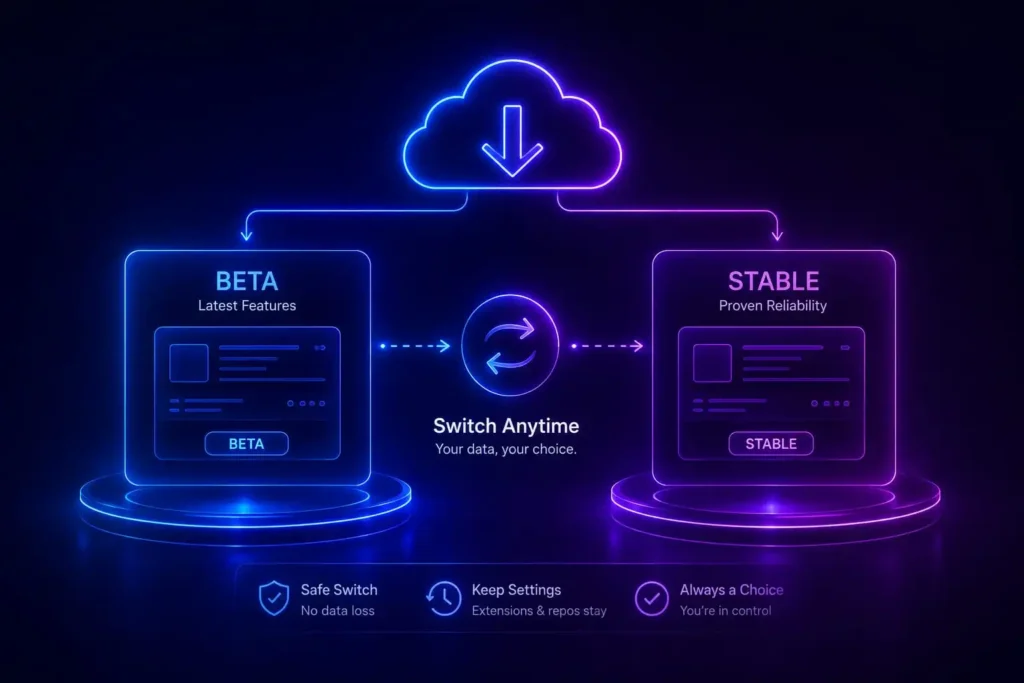
Occasionally the beta version introduces a bug that stable doesn’t have yet, and switching back makes sense. Downloading the current stable APK and installing it directly over the beta version works the same way as any other update — nothing needs to be uninstalled first, and existing repositories and extensions stay in place throughthe switch.
The one thing worth knowing: some settings introduced in a beta release may not exist yet on stable if the corresponding feature hasn’t reached the stable channel, so a rare setting occasionally disappears after downgrading until stable catches up.
Common Download Issues
The download won’t start, or stalls partway through. Usually a connection issue rather than anything wrong with the file itself. Switching networks (from mobile data to Wi-Fi, or the reverse) and trying again typically resolves this.
The downloaded file shows as corrupted when opened. This almost always means the download was interrupted before finishing. Deleting the partial file and downloading again, rather than trying to open the same incomplete file repeatedly, is the fix.
A browser blocks the download automatically. Some browsers flag any APK download by default as a general caution, regardless of the source. This is a browser-level setting, not a reflection of the file itself, and can be adjusted in the browser’s download settings if this specific download is trusted.
The file downloads but installation fails afterward. This is almost always about a device setting (Unknown Sources not yet enabled) rather than the download itself — the device-specific install guides linked above cover this exact step.
Antivirus software flags the downloaded file. APKs from outside the Play Store are commonly flagged by default as a general caution by many antivirus tools, independent of what the file actually contains. Confirming the source is trusted before adding an exception is the safer approach here.
Why CloudStream Isn’t Distributed Through the Play Store
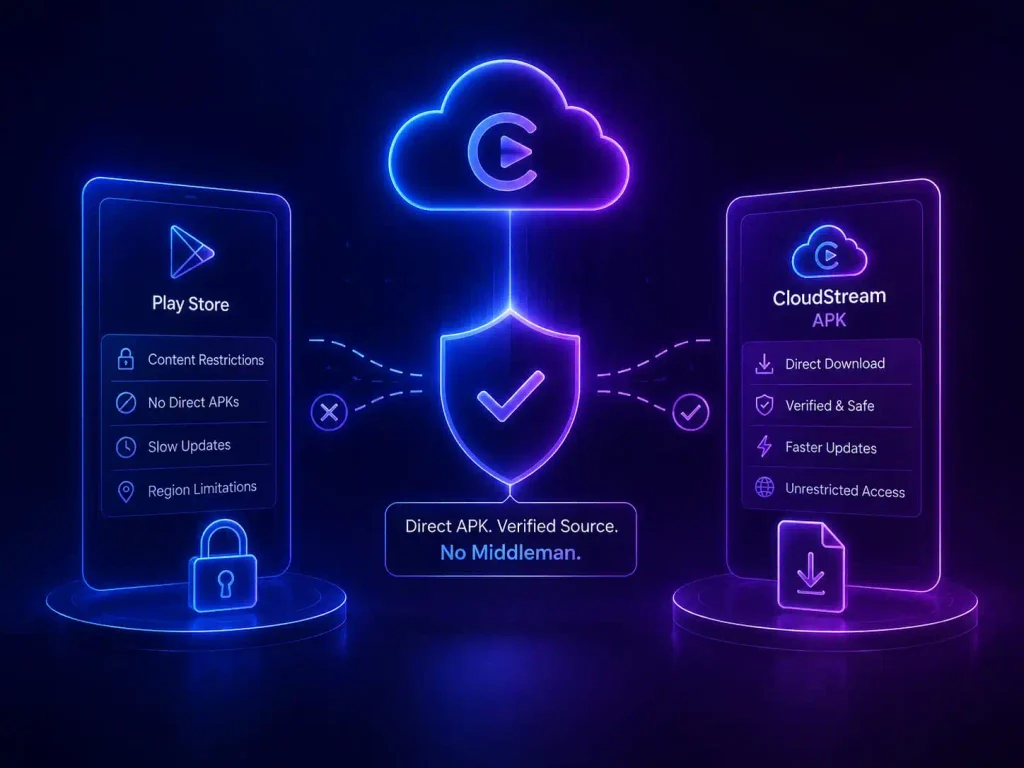
Worth restating plainly here, since it’s the single most common question at the exact moment someone is looking for the CloudStream download and can’t find one on the Play Store: this app isn’t Play Store–listed because its content depends entirely on repositories and extensions a user adds after installing, and app stores generally don’t approve software structured this way. That’s a policy reason, not a safety concern — a direct APK download, from a source that can be verified, is the standard and expected way to get this specific kind of app.
Mirror Downloads and Why They’re Not Linked Here
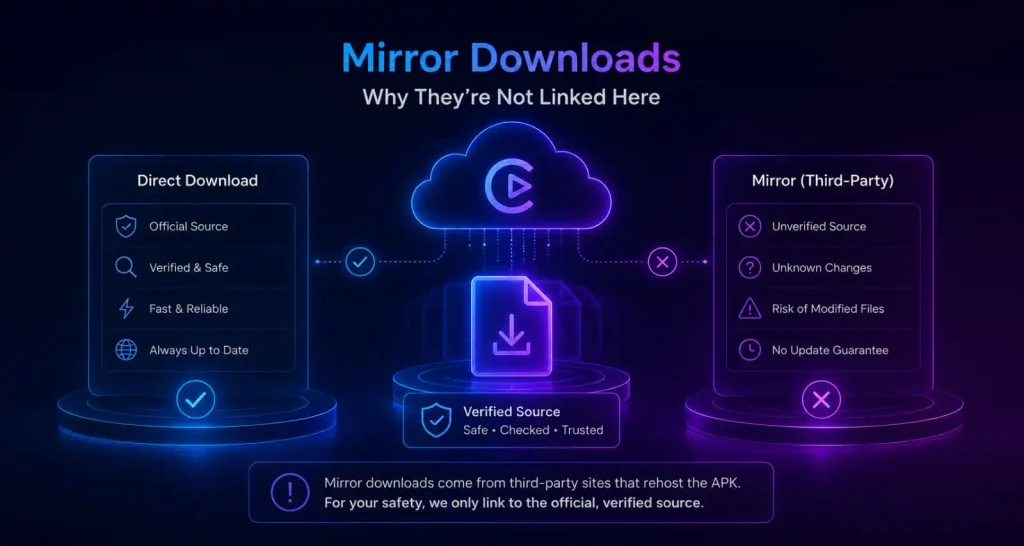
Searching around, it’s common to find this APK hosted on several unrelated third-party sites, sometimes with different file sizes or unclear update dates. This page intentionally links to one verified source rather than listing alternatives, for the same reason covered in the verification section above — a mirror with no clear update history or checksum information can’t be confirmed as unmodified, and there’s no real advantage to using one over a verified, regularly checked source.
Download CloudStream for More Than One Device
The same CloudStream download works across every supported device — there’s no separate file for phone versus PC versus TV. What differs is only the install method afterward, covered in each device-specific guide linked above. Anyone setting this up on multiple devices doesn’t need to hunt down a different download for each one; downloading once and following the relevant install steps per device is all that’s needed. Settings and repositories can also be backed up on one device and restored on another, through the app’s built-in backup option, which saves re-adding everything manually a second time.
What Permissions Does This Download Ask For
During installation, the app requests a small, predictable set of permissions consistent with what a media player needs to function: storage access, for saving downloaded content and reading local files; and network access, for streaming and updating repositories. It doesn’t request anything unrelated to those core functions, such as contacts, messages, or call access — a useful thing to check for on any sideloaded app, since permission requests that don’t match what an app actually does are a legitimate reason for caution.
What Happens to Downloaded Content During an Update
A common concern before updating: does streaming still work, and does anything saved get lost? Updating CloudStream itself — whether from stable to a newer stable release, or switching to beta — only replaces the app, not anything stored through it. Downloaded videos already saved to the device stay exactly where they are, repositories and extensions remain added, and viewing history and preferences carry over untouched. The update process only touches the app’s own code, not the content or settings layered on top of it.
Freeing Up Space After Installing
Once installed, the original downloaded APK file itself can be safely deleted from the device’s Downloads folder without affecting the installed app in any way — the installation process copies what it needs, and the original file becomes redundant afterward. This is worth doing on devices with limited storage, particularly Fire Stick and older Android TV boxes, where storage tends to be the tighter constraint. Keeping a copy is only useful if reinstalling on another device without redownloading is the goal — otherwise, it’s safe to remove.
Choosing Between the Direct Download and a Backup Restore
For anyone who has used CloudStream before and has a settings backup saved, there are two ways to get set up again: downloading fresh from this page and starting from an empty app, or restoring a previous backup after installing. A fresh download makes sense for a first-time setup or when starting over deliberately. Restoring a backup is faster whenever the goal is picking up exactly where a previous setup left off — same repositories, same extensions, same preferences — without manually rebuilding any of it. Both use the same downloaded file; the backup only affects what happens after installation, not the download itself.
Download CloudStream From a Restricted Network
Some workplace, school, or public Wi-Fi networks block APK downloads by default as a general network policy, regardless of what the specific file is. If the download won’t start on a network like this, switching to mobile data or a different Wi-Fi network typically resolves it immediately — this is a network-level restriction, not an issue with the file or the device. On a home network, this is rarely a factor unless a router-level content filter has been specifically configured to block file downloads.
Download CloudStream – Frequently Asked Questions
Yes, completely. There’s no payment, trial period, or account required to download or use it.
Stable has been tested and changes less often; beta receives fixes faster but occasionally has minor rough edges before they’re smoothed out. Both work the same day to day.
This is usually shown inside the app under Settings → About, listing the currently installed version number directly.
Yes. Installing the other version’s APK directly over the current one switches between them without needing to uninstall first, and existing repositories and extensions stay in place.
Different hosting sites occasionally serve outdated or slightly modified versions. Checking the file size and version number against the current values listed on this page is the simplest way to confirm what’s actually being downloaded.
The project’s source code and official releases are published on GitHub, which is the origin point every legitimate download — including this one — ultimately traces back to.
No. Installing a newer version directly over an older one updates it in place, without affecting existing repositories, extensions, or preferences.
This is a general caution many browsers and antivirus tools apply automatically to any APK from outside the Play Store, regardless of what the specific file contains. It’s not unique to this download.
Generally yes — beta simply means newer, less extensively tested changes, not an unstable or experimental build in the riskier sense of that word. Many people use beta as their regular version without issue.
Updates come from the open-source development team on an ongoing basis whenever fixes or improvements are ready, rather than on a fixed release schedule.
Yes — it’s the same file regardless of destination device. Only the installation steps afterward differ by device, covered in the linked guides above.
Yes. Once downloaded, the APK file itself can be transferred over USB, Bluetooth, or a local file-sharing app to a device without its own internet connection, and installed from there the same way.
Yes, this is standard behavior for most direct file downloads and isn’t specific to this app — it depends on the browser being used rather than anything about the file itself.
No — the app itself is a small file, roughly 60MB. Data usage during actual streaming afterward depends on video quality and length, not on the initial download.
This depends on the browser or download manager being used rather than the file itself — most modern browsers support resuming an interrupted download automatically.
This isn’t standard for a genuine APK download and is worth treating as a caution sign. A legitimate direct download shouldn’t require anything beyond normal browser permissions before the file itself begins downloading.
Check back on this page directly rather than searching for an alternate source — it’s kept current, and a broken link here gets fixed rather than requiring a search for an unverified replacement elsewhere.